
Many travelers plan their visit to Japan to coincide with the flowering of the cherry blossom in springtime. Yes, the season is beautiful and the flowers impressive, but they’re missing out big time because winter in Japan is even more spectacular.
The Japanese enjoy their snowfall to the max and hold annual ice and snow festival the likes of which you won’t see anywhere else in the world. The festivals are one of the best things to do in Japan in the winter and attract millions of visitors to view the displays of elaborate sculptures and illuminations.
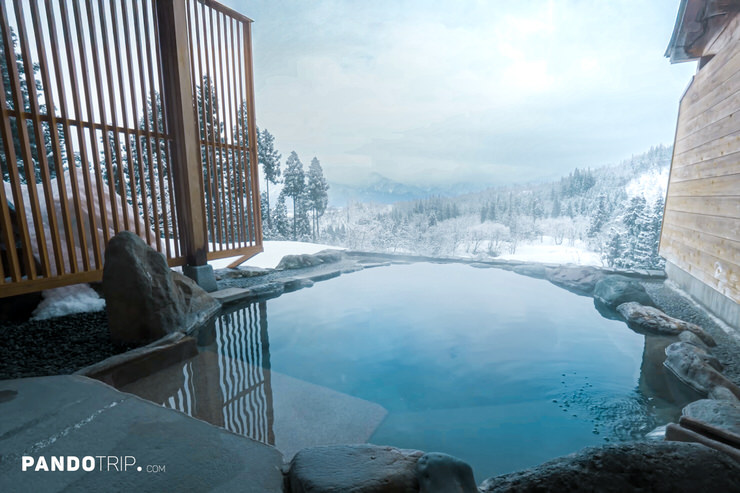
Onsen, bathing outdoors in natural hot springs, is a popular year-round activity in Japan, but doing it during the winter months when the pools are surrounded by snow and ice adds another incredible dimension to the experience. Japan also has amazing winter sports resorts for skiing and snowboarding, and they’re all in unbelievably stunning landscapes.
Do you need any more reasons to start planning a trip to Japan in winter?
Winter Months in Japan
The Japanese winter is a relatively brief one starting around the beginning of December and running through to the end of February or at the latest, mid-March. But, as with many countries, the further north you travel then the winters begin to get longer and harsher.
In some parts of northern Japan and in the more mountainous regions, winter can extend from November right through to May with the coldest temperatures being experienced around mid-season in February.
Stay in southern Japan or in the Pacific Ocean coastal areas and because of the milder climate there, you might not see one snowflake fall all winter and the days can often be gray, damp and overcast.
Head west to the prefectures along the coastline of the Japanese Sea facing towards Russia and Korea and winter is a whole new story. Temperatures drop to below zero almost daily, and heavy snowfalls are frequent.
Klook.comWhat is the Best Time to Visit Japan in Winter?
Japan is a country which receives over twenty million visitors annually and as with many places which attract travelers in vast quantities; it has its touristic high and low seasons.
January to March is one of the best times to visit Japan as it is considered to be the low season, there are fewer crowds and accommodation is generally more economical. Though it has to be said, forget the days leading up to and after New Year. The same as Oban in August and Golden Week in late April, New Year is one of the main celebratory periods and can be absolute chaos for transportation. Hotel reservations are also hard to come by as everything is booked well in advance and many businesses, shops, and restaurants close for the holidays.
Early December is also a good time to visit Japan as it’s the shoulder month between high and low season, the weather is cold, but clear and there are not so many visitors to contend with.
So once you’re there, what are the top ten places to visit in Japan in winter?
Klook.com1. Winter Illuminations in Tokyo
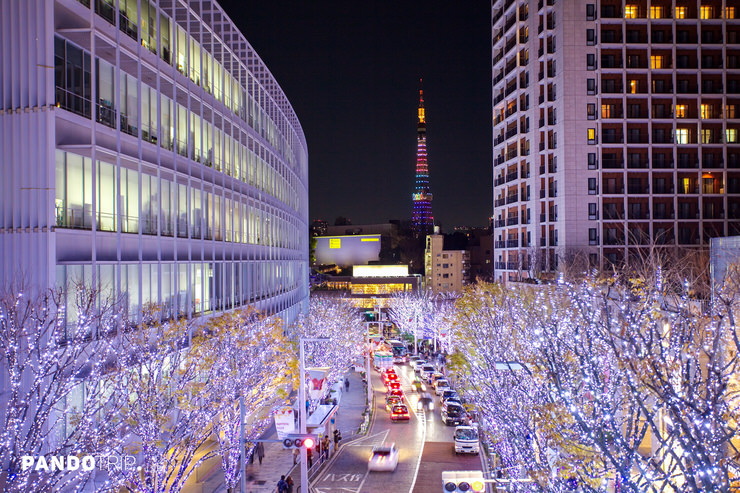
There are winter illuminations all over Japan, with each district competing to be the one with the most impressive display, but the ones you shouldn’t miss are in the capital city, Tokyo. In the past, lighting up the city was done with LED lights, now it’s LED with digital choreography, projection mapping, and interaction that draws the crowds.
Tokyo positively glows during the festive season, but some areas of the city excel at illuminations more than others. The best winter illuminations in Tokyo are Tokyo Mega Illumination, Roppongi Hills, Meguro River, and Marunouchi.
Tokyo Mega Illumination
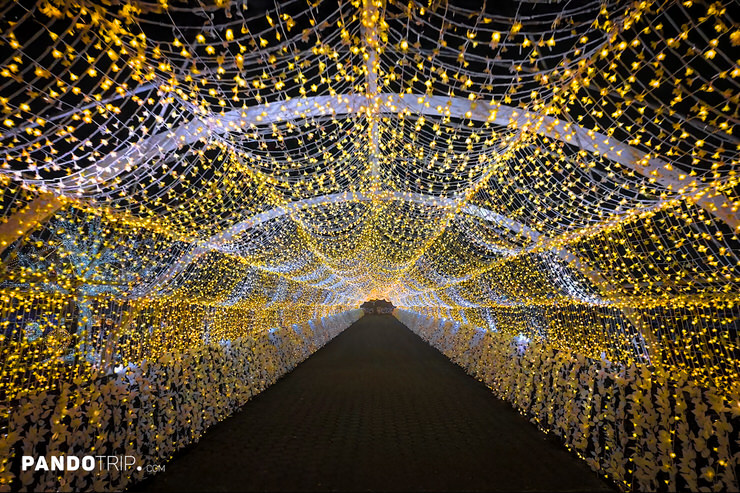
The Tokyo Mega Illumination is a relatively recent addition to Tokyo’s winter illumination scene, but it has quickly become the most popular and highly-rated light displays in the city. The Tokyo Mega Illumination takes place at the Oi Racecourse in Shinagawa, Tokyo. The event is held on the grounds of the racecourse, specifically occupying the central area.
The 2025-2026 season is scheduled to run from November 1, 2025, to January 11, 2026, on non-race days. The prices vary from 5 to 7.5 USD depending on the day. Get your tickets advanced online, it will be cheaper compared to on-site prices.
Roppongi Hills Christmas Illumination
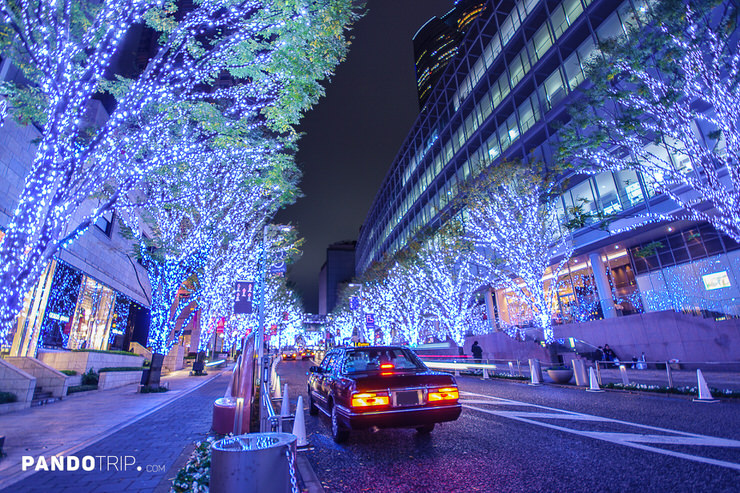
The Roppongi Hills Christmas Lights draw mega crowds of over seven million people every year. There are several illumination sites throughout the complex, though the star of the show remains Keyakizaka Street. Approximately 800,000 “Snow & Blue” LEDs illuminate the 400m tree-lined avenue, offering a gorgeous view with Tokyo Tower in the background. It’s pure winter magic. This year, 66 Plaza also hosts “Luminous Bouquet,” a dazzling display themed around glittering bunches of flowers, while festive Christmas trees appear at the West Walk.
While you’re there, don’t miss the Christmas market at O-Yane Plaza, modeled after the famous Stuttgart Christmas Market in Germany. It’s Tokyo’s oldest and biggest Christmas market with beautifully decorated stalls, the enticing aroma of mulled wine and Christmas spices, and a fantastic festive atmosphere.
The illumination runs from November 4 to December 25, 2025, lighting up the area daily from 5:00 PM to 11:00 PM. The Christmas market opens November 22 and runs until December 25 (11:00 AM to 9:00 PM).
Meguro River Winter Illuminations
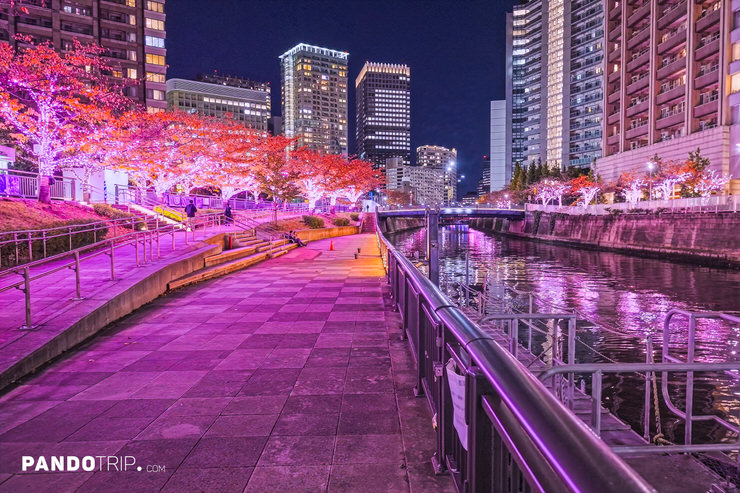
The Meguro River Winter Illuminations is a stunning winter event that transforms Tokyo’s Meguro River area into a magical light display. Spanning about 2.2 km between Gotanda and Osaki stations, the event features around 350,000 pink LED lights adorning the cherry trees along the river. The lights create a breathtaking “Winter Sakura” effect, mimicking the look of cherry blossoms in winter and giving visitors a chance to enjoy the beauty of sakura outside the usual spring season.
What makes this illumination extra special is its eco-conscious approach. It’s the first large-scale lighting event in Tokyo powered entirely by locally recycled energy sources.
This year, the Meguro River Winter Illuminations will run from December 05, 2025, to January 31, 2026.
Marunoichi Illumination
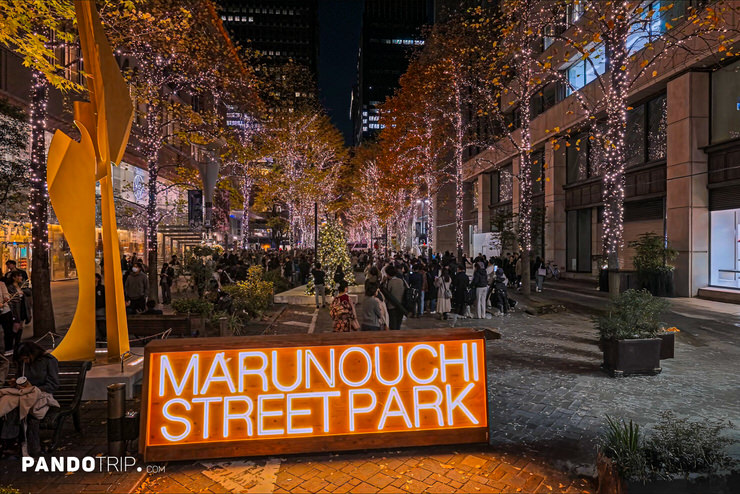
In 2025, the Marunouchi Illumination celebrates its 24th year. Champagne gold lights create a magical, starry vibe along Marunouchi Naka-dori Avenue. This 1.2 km stretch from Yurakucho to Otemachi lights up 286 trees with around 820,000 LED bulbs, all powered by renewable energy as part of ongoing environmental efforts.
The lights on Naka-dori will shine from November 13, 2025, to February 15, 2026 (until midnight in December, 11:00 PM in January). From November 28 to December 25, Gyoko-dori Avenue (linking Tokyo Station to the Imperial Palace) will feature additional lights and an outdoor skating rink. This year also marks Gyoko-dori’s first-ever Christmas tree.
New for 2025, “Marunouchi Street Park Winter” transforms both streets into a festive destination. Naka-dori hosts a market with food trucks, while Gyoko-dori features 19 pop-up shops in charming mountain hut-styled stalls serving classic Christmas dishes.
2. Sapporo Snow Festival
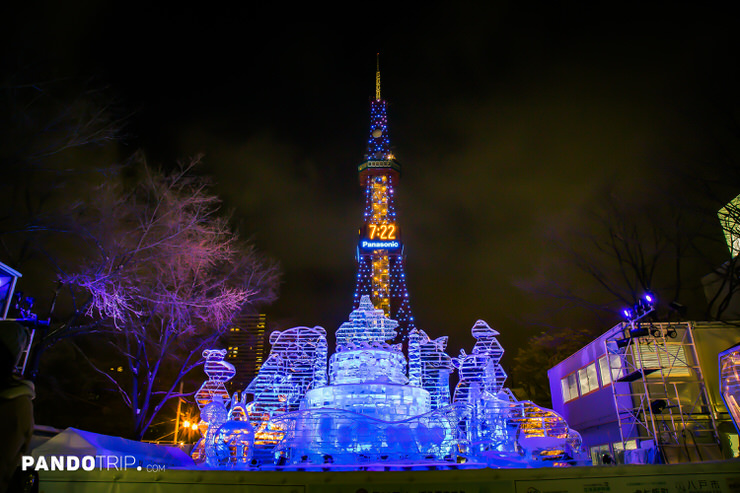
The Sapporo Snow Festival is the largest and most spectacular snow festival in Japan. As well as taking over the streets of the city with ice and snow sculptures in forms as diverse as Mickey Mouse to Donald Trump.
The week-long winter celebration in Sapporo, the capital of the Hokkaido prefecture, takes place during one week in February and attracts over two million visitors every year. The 2026 Snow Festival is scheduled for February 4-11.
Accommodation is at a premium and expensive, so if you’re planning on going make sure to book well in advance. Try arriving a few days before the festival starts and leaving after its finished and it could help save on airfares.
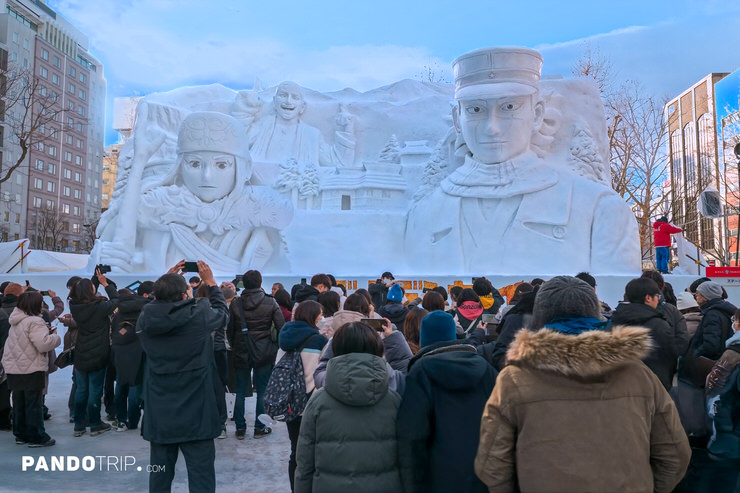
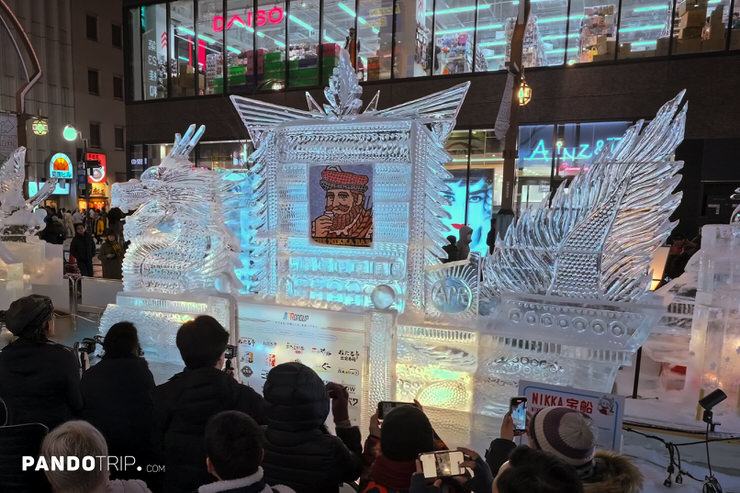
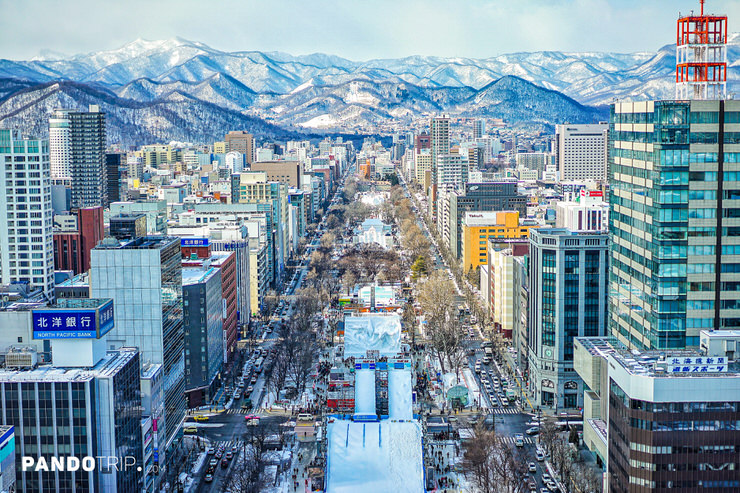
The festival occupies three major sites – the Odori, the Susukino and the Tsu Dome.
Odori is the main spot in the heart of Sapporo, stretching 1.5 kilometers and showcasing massive snow sculptures – some as big as buildings! In the evenings, from sunset until 10 PM, these sculptures are transformed into dazzling works of art with intricate lighting and projection mapping shows. Visitors can even enjoy ice skating at a rink set up nearby. For a stunning view of the Odori snow sculptures, head to the Sapporo TV Tower at the eastern end of Odori Park.
Susukino is located in the entertainment and red-light district, featuring around 60 intricate ice sculptures. While smaller than the snow sculptures in Odori, they have their own charm. For example, some ice sculptures have frozen fish inside, creating unique visual effects. You’ll also find an ice bar here, where drinks are served in glasses made of ice. Like Odori, the ice sculptures in Susukino are beautifully lit after dark.
Tsu Dome, located just outside Sapporo, offers a variety of snow activities for both kids and adults. Highlights include three unique snow slides, a snow rafting slope, and a snow maze. There’s even a dedicated area for building snowmen! TsuDome usually opens a few days before the official start of the festival, making it perfect for those who want an early taste of the fun.
Interesting Fact: The Sapporo Snow and Ice Festival began in the 1950s with just six snow statues built by students in Odori Park.
The Best Time to Visit Sapporo Festival
Visit the festival at the beginning of the week as the sculptures begin to lose shape and get dirty quite quickly. Avoid the first day if you can as its the most crowded. For some smashing fun, join in the ice sculpture destruction session on the day after the festival ends. Get there early, as by midday all that’s left are mounds and mounds of melting crushed ice.
Other Winter Festivals In Japan
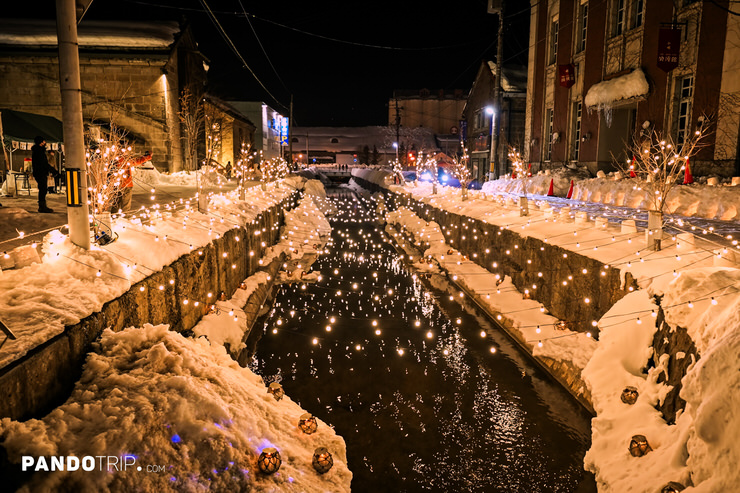
The Otaru Light Snow Path Festival takes place during the similar time as Sapporo’s, and as it’s in a neighboring town, most visitors make the most of the opportunity and visit both festivals. If you can’t make it to Sapporo, try one of these other festivals instead, Tokamachi Snow Festival or Asahikawa Winter Festival. They’re all fantastic.
3. Shirakawa-go Winter Village
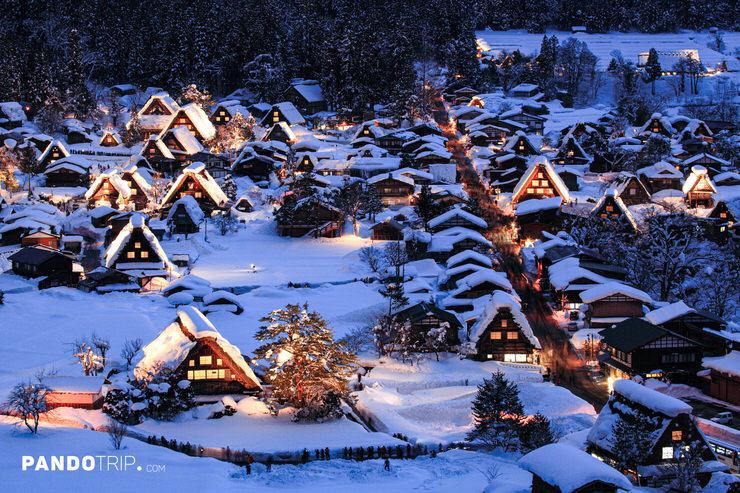
The Shirakawa-go region of Japan was designated a UNESCO World Heritage Site in the mid-1990s to conserve the unique architecture of the houses. The Gassho-zukuri, or hands in prayer, farmhouses have steeply sloping roofs constructed without nails which enables them to cope structurally with the heavy winter snowfalls in the area.
Snowfalls begin around mid-December in Shirakawa-go turning it into a Japanese winter wonderland for the entire season, and the Gassho-zukuri farmhouses take on a snow-covered picture-perfect look. The most popular village to visit is Ogimachi which is the biggest and has several of the traditional farmhouses over two hundred years old.
Shirakawa-go Winter Light-Up
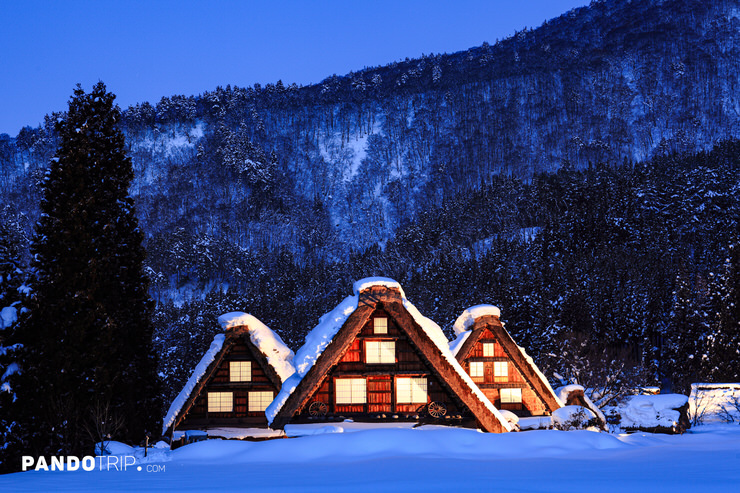
On winter evenings, Ogimachi hosts special illumination events, creating a magical mix of light and snow. For 2026, the illuminations are scheduled for January 12, 18, 25, and February 1. Attendance requires advance reservations, and one of the most unique options is booking a stay in one of the iconic farmhouses during the event.
These events are incredibly popular in Japan, so it’s best to plan and reserve as early as possible. You can find all the details on the official website.
Visiting During the Day
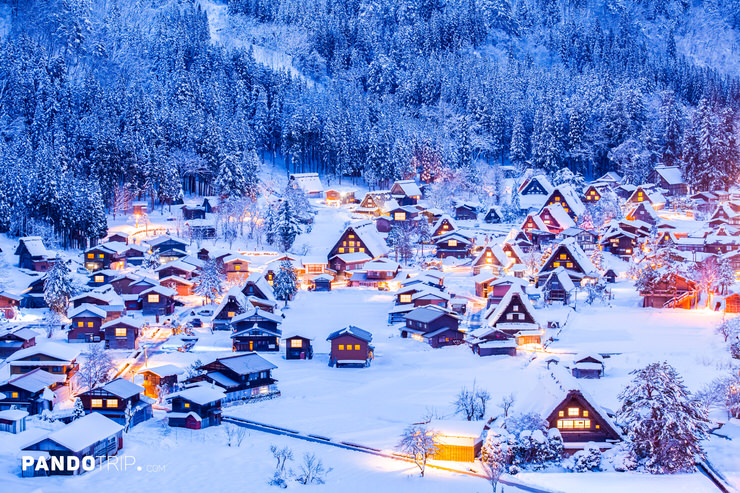
If you don’t manage to secure a spot for the illumination events, Shirakawa-go is still worth visiting during the day. No reservations are needed for daytime visits, but note that restrictions may apply on illumination days. Many guided tours to Shirakawa-go depart from cities across Japan – check out this list of options.
An Alternative to Shirakawa-go
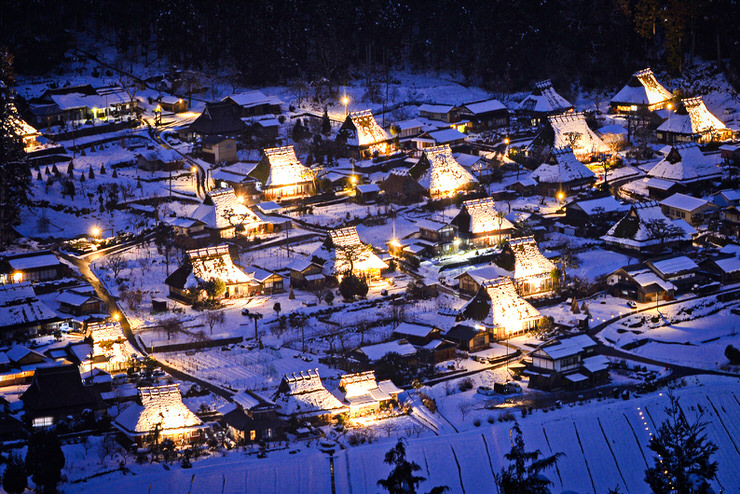
While Shirakawa-go is famous for its stunning winter illuminations, there’s a much lesser-known spot in Japan that offers a similar vibe. Kayabuki no Sato, located in Miyama, Kyoto Prefecture, is a small village known for its kayabuki (thatched-roof) houses. These homes share a resemblance to the gasshō-zukuri style but with less steep roofs. Many of these houses are over 200 years old and are still home to local families today.
Every winter, the village hosts the Yukitouro (Winter Lantern Festival). In 2026, it runs from January 19th to 23rd, a shorter window than previous years, so plan accordingly. Around 80 street lanterns and 200 LED lanterns transform the village into a magical nighttime scene, with approximately 20 thatched-roof houses at the center beautifully illuminated. The warm glow from each home adds a peaceful charm to the quiet night, a view completely different from what you see during the day.
The illuminations run daily from 4:00 PM to 7:00 PM, with food stalls open from 3:00 PM. On January 21st, you can enjoy mochi pounding, warm red bean soup (zenzai), and traditional Japanese dance performances. Note that parking requires advance reservation for all dates.
If you’re planning a visit, there’s a guided tour departing from Osaka – check availability here. There’s also another tour option from Kyoto, and you can find pricing and booking details here.
Klook.com4. Jigokudani Monkey Park
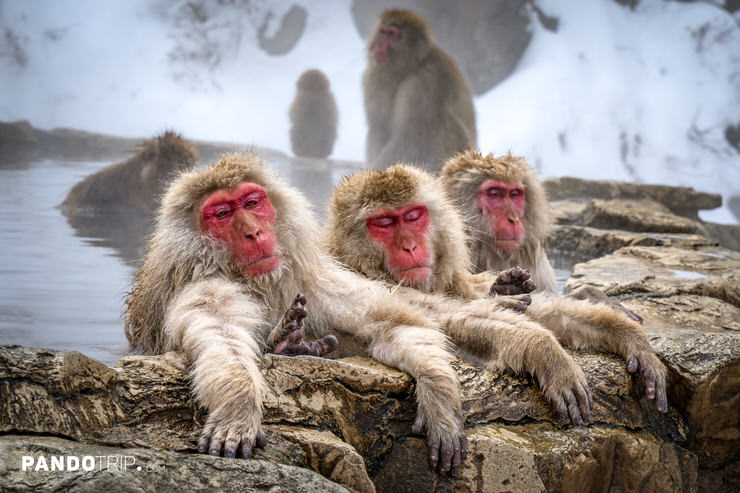
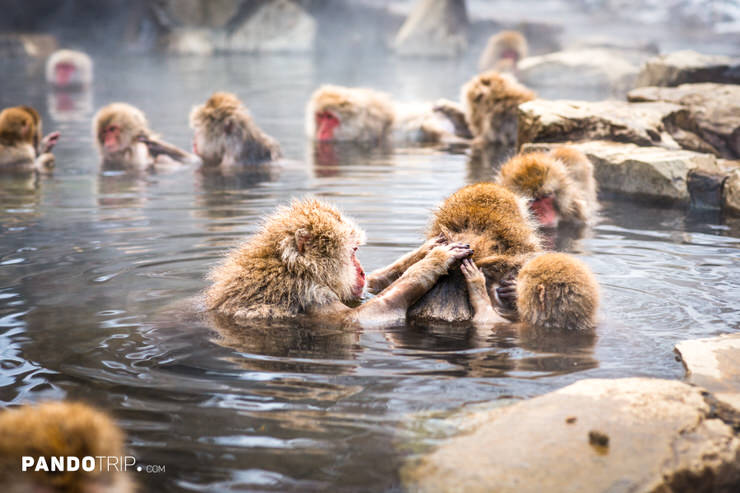
Most of you have probably seen photos of snow monkeys bathing in hot springs. These wild Japanese macaques became famous back in 1970 when a photo of a bathing macaque made it onto the cover of LIFE magazine. Then in 1992, they made their film debut in the opening scene of Baraka, soaking in a steaming onsen.
Even though these snow monkeys are known worldwide, their home in Jigokudani isn’t the easiest place to visit. The park is located about an hour from Nagano city in Japan. Once you arrive by car or bus, there’s still a 1-mile (1.6 km) walk to reach the park itself. Depending on the weather, it can take 30-40 minutes to get there, and in winter, the trail can be icy due to geothermal heat melting parts of it.
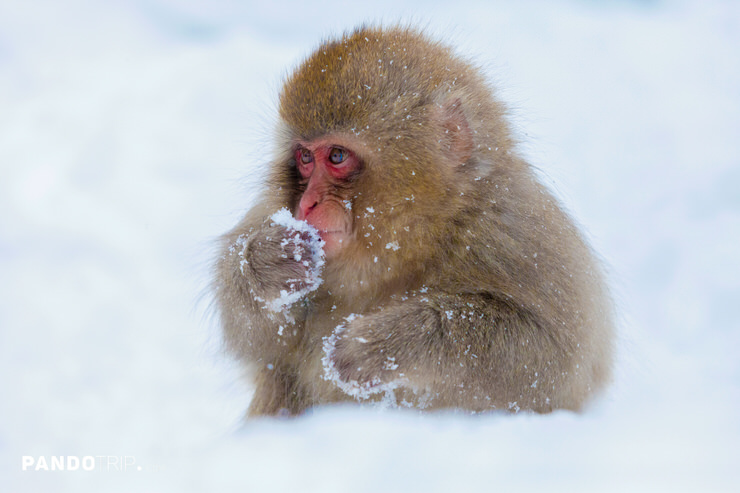
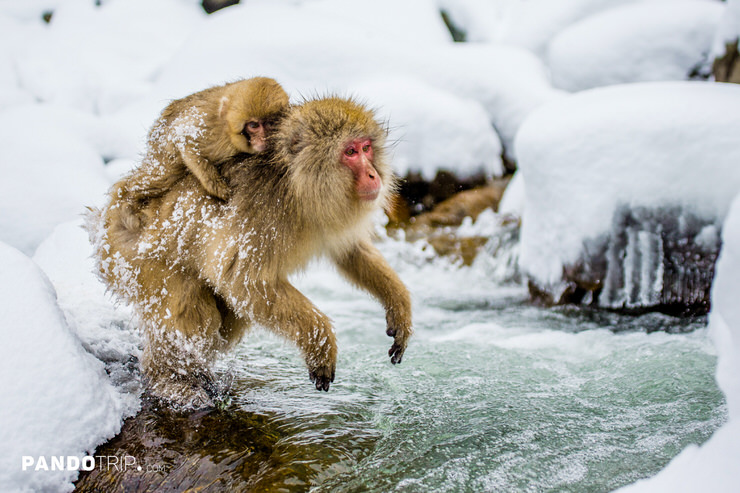
The wild macaques in Jigokudani roam freely over a large area. One of their favorite spots is the thermal waters in the Yokoyu River valley, where they take dips during the harshest winter days. These monkeys are the only ones in the world known to bathe in hot springs, not because they’re big on hygiene, but to escape the freezing cold.
Seeing them up close is a truly unique experience. It’s rare to watch wild animals so freely in their natural habitat, let alone while they’re relaxing in hot springs. At Jigokudani Monkey Park, you can do just that, and it’s as magical as it sounds.
The Best Time to Visit Jigokudani Monkey Park
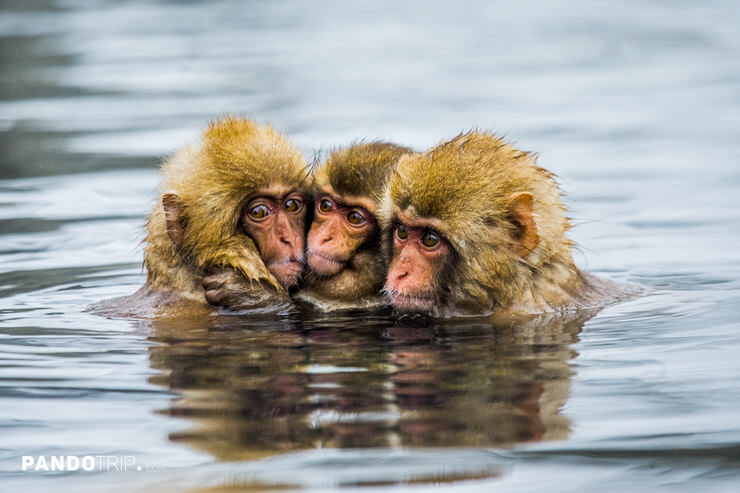
Winter when there is snow on the ground, around December through to March, is a good time to visit Jigokudani Monkey Park, but the best months are January and February as the temperatures drop to to around minus ten degrees Celsius which is when the macaques prefer to bathe. Winter, when the spa waters are steaming and the monkeys have a dusting of snow on their fur, is also the best time for taking amazing photos.
Where to Stay Near Jigokudani Monkey Park
If you’re looking for the most convenient (and also one of the priciest) options, check out Senjukaku Ryokan, a favorite of Japan’s royal family. This place is all about traditional Japanese vibes and even has outdoor hot spring baths. The rooms come with mountain views, tatami (woven straw) floors, and a low table with sitting cushions for that authentic feel. Plus, the ryokan serves up seasonal Japanese dishes made with organic veggies and local beef.
For more budget-friendly options, consider staying in nearby areas like Shibu Onsen, or Yudanaka Onsen, both are great spots close to the monkey park.
How to Get to Jigokudani Monkey Park
The easiest way to get there is by taking the Hokuriku Shinkansen from Tokyo Station to Nagano Station. From Nagano, hop on a bus for about an hour. Once you reach the bus stop, it’s a 5–10 minute walk to the trailhead and then a 30-minute hike along the 1.6 km trail to reach the park.
If you’d rather not go on your own, there are plenty of guided tours available online. Most tours start from Nagano or Tokyo, and some even include visits to other spots like Togakushi Shrine or Zenkoji Temple along with the monkey park.
Klook.com5. Winter Travel via JR Tadami Line
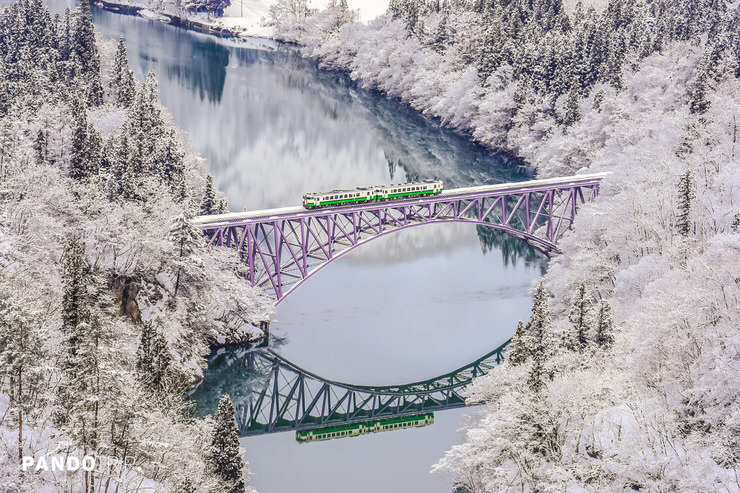
The JR Tadami Line is an 80-mile (135 km) railway stretching through some of the most breathtaking landscapes in Fukushima and Niigata Prefectures. Known for its heavy snowfall, this region is one of Japan’s most famous and picturesque winter wonderlands. The train connects the towns of Aizuwakamatsu and Uonuma, winding through mountain valleys covered in pine forests, alongside winding rivers, and crossing dramatic bridges. The journey takes about 4.5 hours, so you have plenty of time to let the views roll past like a slow film outside the window.
Important tip: There is no reliable onboard food service on the regular local trains, and buying options along the line can be limited depending on timing. Stock up before you depart. A bento and drinks from Aizu-Wakamatsu Station are the simplest plan. If you are stopping around Aizu-Yanaizu, it is also a good place to look for local snacks such as awamanju (millet steamed buns) near the station area.
Top Sights on the Tadami Line
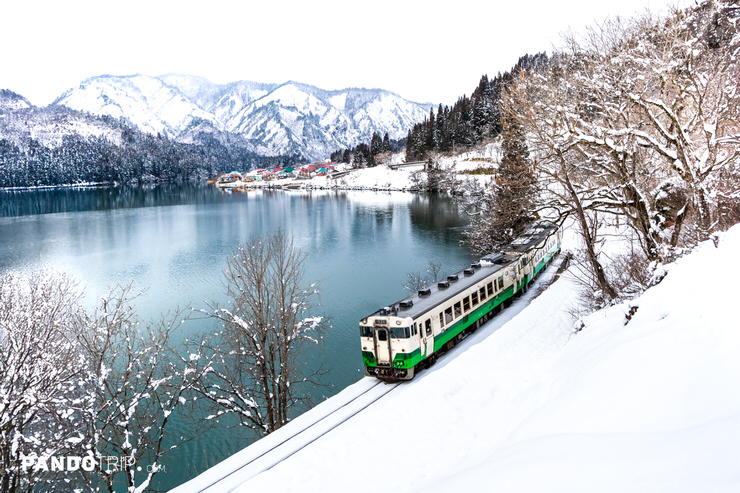
The ride itself is the main event, but the best way to experience the region is to hop off at a few stations and explore.
Note: Service is thin on some sections, and only a small number of trains run the full Aizu-Wakamatsu to Koide distance each day. Many services turn back earlier, so check the timetable carefully and plan your stops around the specific segment you want to ride.
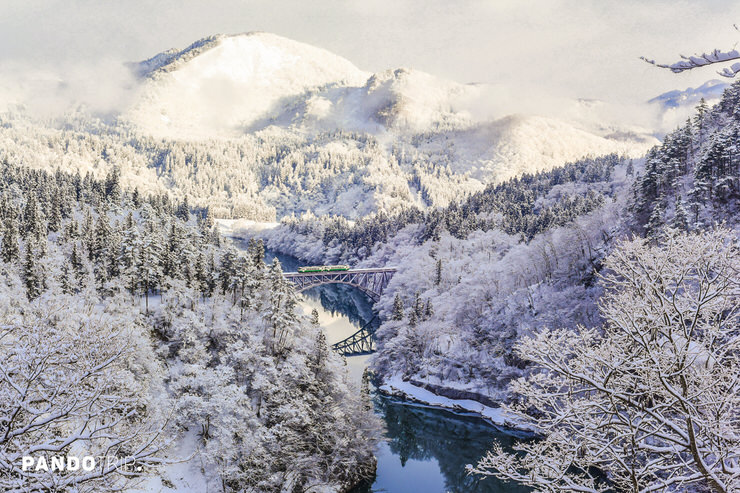
One of the highlights of the Tadami Line, and one of Japan’s classic rail photo scenes, is the First Tadami River Bridge Viewpoint. From the lookout you can see the pale lavender steel arch bridge (about 174 m long) spanning the Tadami River. On calm days, the bridge reflection doubles the scene, like a mirror laid across the water. To visit, get off at Aizu-Miyashita Station, then continue toward Michi-no-Eki Mishima-juku (the roadside station). Instead of assuming a winter shuttle, plan around the local bus schedule (which is limited), and keep a taxi as your backup. Walking is possible, but it can be slow and slippery in snow, and the viewpoint involves an uphill approach.
The Tadami region also rewards travelers who want hot water and warm air after a cold platform wait. A strong base before or after the ride is Aizu Higashiyama Onsen in Aizu-Wakamatsu City, a long-running onsen area with more than 1,300 years of history. Along the line itself, you can detour to Kaneyama Town for a naturally carbonated mineral spring near Aizu-Ōshio Station. For bathing options near Aizu-Kawaguchi, note that not every facility in the area operates continuously, so treat it as a place to choose a specific onsen or ryokan in advance rather than relying on a single “station-adjacent” bath.
If you are traveling in February, do not miss the Tadami Snow Festival (Feb 14–15, 2026). The event is known for huge snow sculptures and an evening atmosphere that often includes fireworks, making it the biggest winter festival draw in this part of the Tadami area.
For more ideas on what to do along the Tadami Line, check out this downloadable e-book.
6. Japan Winter Sales
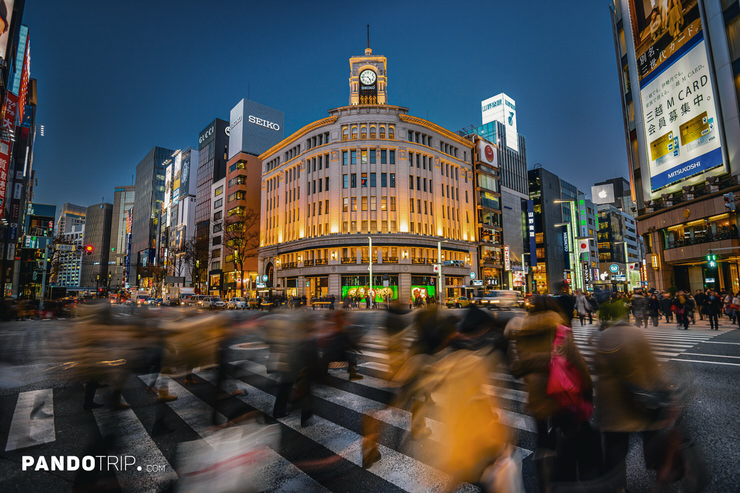
Japan in winter is retail therapy heaven. No matter what area of Japan you visit or which city you find yourself in, there will be sales stickers on just about everything and some fantastic bargains to be had.
Winter Sales in Japan Timeline
Winter sales in Japan kick off around mid-December, but don’t expect huge discounts right away – early deals usually range between 10-20%.
The real shopping frenzy starts after New Year’s, with Hatsu-uri on January 2nd. This special New Year’s event is one of Japan’s most significant shopping traditions, with roots going back to the Edo period. Back then, fish markets and retail shops in the Nihonbashi area would reopen on January 2nd after the New Year celebrations.
In Japanese culture, January 2nd is considered a lucky day for “firsts,” a tradition known as kotohajime – the idea of starting something new for the year. The first sale of the year, Hatsu-uri, is inspired by this concept. During this event, not only are there big discounts, but stores also sell Fukubukuro, or “Lucky Bags,” which we’ll talk about in a bit.
The third stage of winter sales in Japan is the Winter Clearance Sale, which runs from mid-January through February. This sale focuses on clearing out winter stock, with especially steep discounts on fashion items. It’s the perfect time to snag winter clothing and accessories at great prices. Premium brands often offer discounts of 50-80%, making it a dream for bargain hunters.
Fukubukuro or Lucky Bags
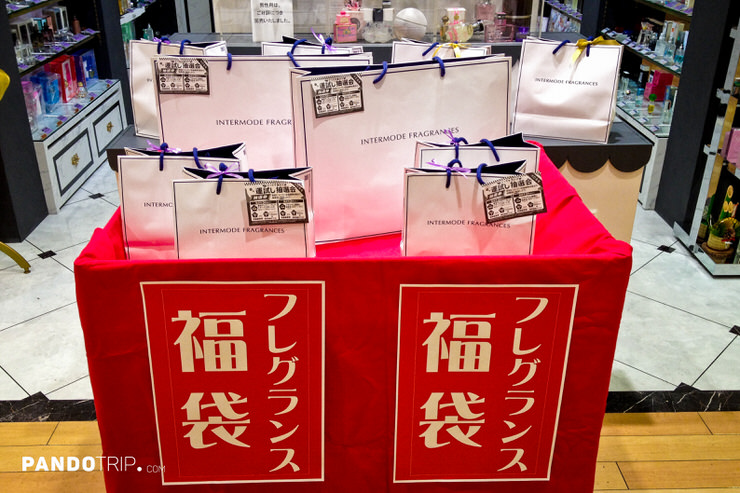
As mentioned earlier, Fukubukuro, or “Lucky Bags,” are sold exclusively on January 2nd during Hatsu-uri. These are mystery bags offered by retailers, and the catch is – you won’t know what’s inside until you buy it. The only thing guaranteed is that the value of the contents far exceeds the price you pay.
Fukubukuro isn’t just about shopping; it’s considered a symbol of good fortune for the year ahead. By starting the year with these lucky purchases, buyers hope to attract prosperity in the months to come. It’s a unique Japanese tradition that blends mystery, luck, and, of course, big savings.
The Best Places for Winter Shopping
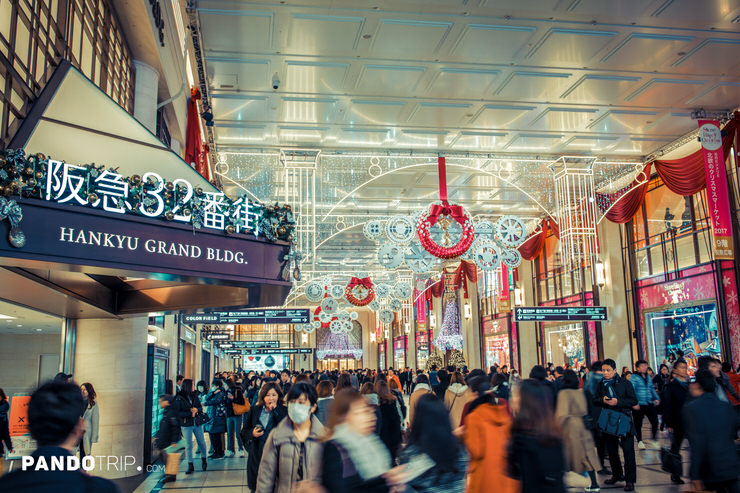
Winter sales take place all across Japan, but the biggest variety and best deals are usually found in major cities. Tokyo is the top spot for shopping, offering the largest selection of participating stores and the longest sale period. It usually runs from early December through February. Another great option is Osaka, which also boasts a wide range of stores and plenty of shopping opportunities.
7. Ginzan Onsen, Yamagata
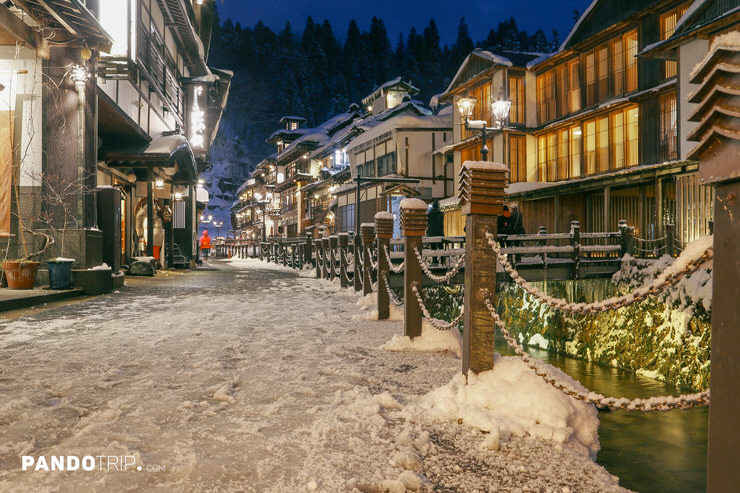
Bathing in hot springs or onsen is an enjoyable way of relaxing in Japan. In winter, when there’s snow on the ground and a chill in the air, taking onsen outdoors becomes an even more pleasurable experience.
One of the most picturesque winter onsen destinations in Japan is the charming Ginzan Onsen in Yamagata Prefecture. This small mountain town was established over 600 years ago and features a pedestrian-friendly center lined with historic ryokans (traditional inns with wooden roofs) along the Ginzan River. Ginzan Onsen is especially famous for its winter scenery, where heavy snow blankets the traditional buildings, creating a magical atmosphere that’s made even more enchanting by the gas-lit streetlights.
This unique setting hasn’t gone unnoticed by filmmakers. The breathtaking landscapes of Ginzan Onsen inspired the iconic Oscar-winning animated film Spirited Away. Every year, fans visit Ginzan Onsen to experience this real-life connection to the beloved movie. The town also served as a filming location for the NHK drama Oshin, which became Japan’s most-watched TV series of all time back in 1983.
Hot Spring Experience
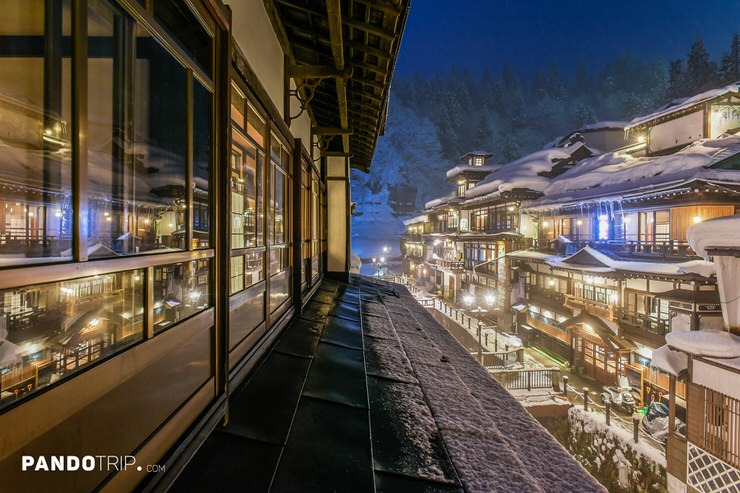
The hot springs in Ginzan Onsen are known for their sulfur and sulfate-rich waters, with a slightly salty taste and excellent warming properties. Thanks to the unique mineral composition, the warmth lingers long after your soak. Salt minerals coat the skin, slowing heat loss and keeping you warm well beyond your bath.
These waters are also celebrated for their therapeutic and healing qualities, particularly for chronic skin conditions or general skincare. With lower hydrogen sulfide content and plenty of metasilicic acid and calcium ions, the water naturally moisturizes, leaving your skin soft and smooth.
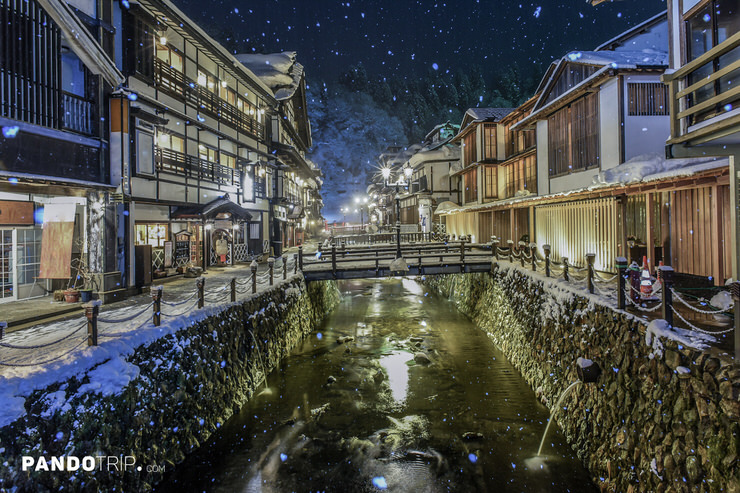
Ginzan Onsen offers a variety of bathing options. For a simple and affordable dip, check out the Shirogane-yu public bath, designed by renowned architect Kengo Kuma, with its striking triangular design. If you’re short on time, the Warashi-yu foot bath is a free option where you can soak your feet in the same natural spring water used throughout the town.
For the ultimate relaxation, stay overnight at a ryokan to enjoy a private onsen experience. The modern Fujiya Ryokan features five different types of baths, from underground baths to semi-open-air ones. All baths are private, offering you complete tranquility. Another excellent choice is Ginzanso Ryokan, where some rooms come with private outdoor baths overlooking the landscape. In addition to indoor and outdoor options, it’s famous for its shallow “neyu” bath, where you can lie down and fully unwind.
8. Hokkaido Drift Ice Cruise
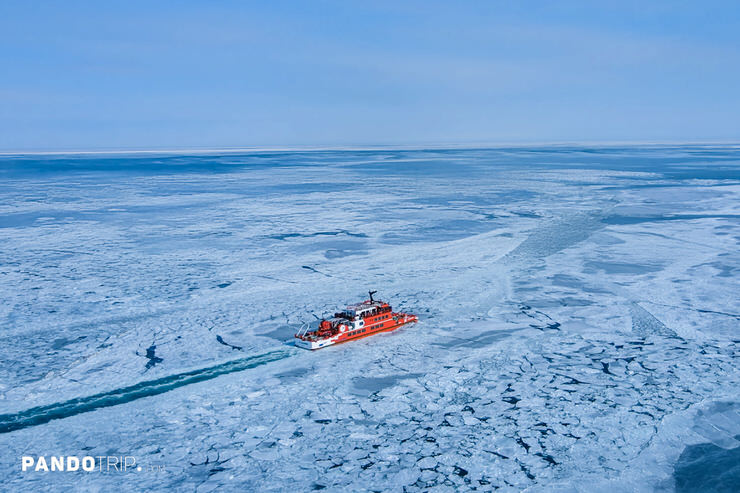
If you have ever wanted a taste of the North Pole, you can find it in Japan. While icebreaker cruises are usually associated with the Arctic, Japan’s only drift ice cruises run on the Sea of Okhotsk off Hokkaido’s eastern coast. A Hokkaido drift ice cruise offers a striking winter experience, where travelers watch vast white floes grind and drift across a steel-blue sea.
The Sea of Okhotsk along Hokkaido is influenced by fresh water from Russia’s Amur River, which lowers the salinity of the seawater and makes it easier for ice to form. By late January, intense winter cold creates broad sheets of ice that gradually drift south, piling up along Hokkaido’s shoreline.
Best Time to Visit
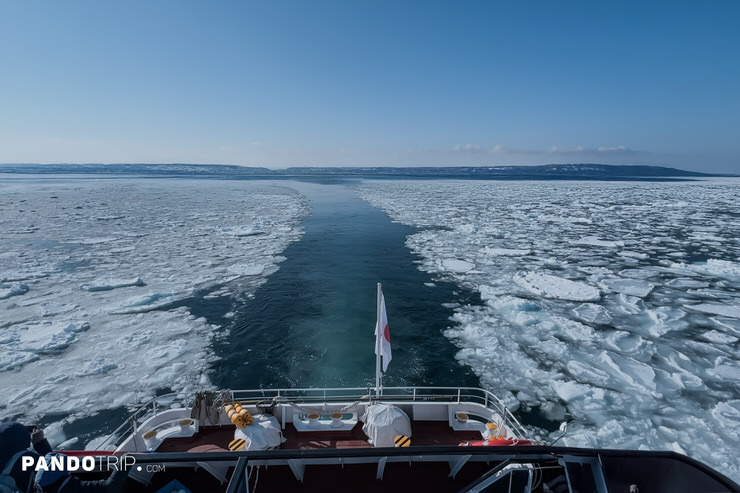
The Hokkaido drift ice cruise season for 2025/2026 runs from mid-January to late March (specifically Jan 20-Mar 31 for Abashiri; Jan 16-Mar 31 for Mombetsu). However, the ideal time to go is between mid-February and early March. During this period, the ice is usually at its thickest and most stable, making the breaking and drifting ice displays especially stunning.
Departure Points and Cruise Options
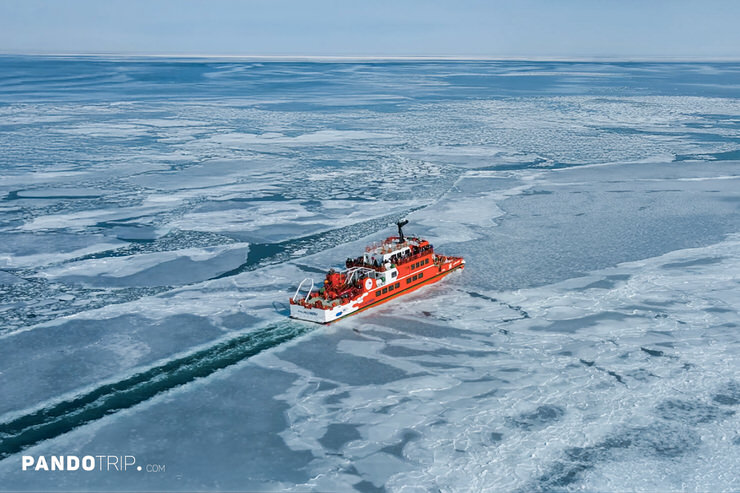
There are two main drift ice cruise options: the Aurora Icebreaker departing from Abashiri and the Garinko-go from Mombetsu. Each offers a slightly different experience.
The Garinko-go III IMERU is the region’s newest ship (replacing the older Garinko-go II). It accommodates 235 passengers and is equipped with unique front-mounted Archimedean screws (drills) that allow you to get up close to ice floes and watch as the ship grinds through the ice. It is smaller and more agile than the Aurora, allowing it to maneuver closer to ice formations. Tickets can be purchased online, guided tours from Sapporo are also available.
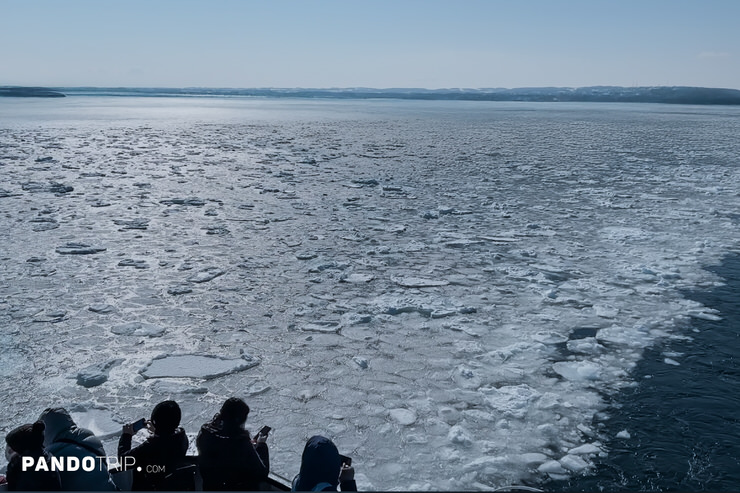
The Aurora Icebreaker is much larger, with a capacity of up to 450 passengers. It uses its 491-ton weight to crush the ice, creating cracks and openings as it moves. The ride is smoother and more comfortable, with minimal vibration. Thanks to its size, the observation deck is higher up, offering a better panoramic view, although it doesn’t provide the same close-up interaction with the ice-breaking action as the Garinko-go. Tickets for the Aurora can be purchased at the departure zone in Abashiri (cash only). It’s recommended to make reservation online in advance.
The Aurora Icebreaker is a larger vessel with a capacity of up to 450 passengers. It uses its massive 491-ton weight to crush the ice, creating cracks and openings as it moves. The ride is smoother and generally more stable. Thanks to its size, the observation deck is higher up, offering a better panoramic view, although it doesn’t provide the same “grinding” action as the Garinko-go.
Reservations are highly recommended. While walk-up tickets may be available at the Abashiri terminal (often cash only), popular time slots sell out quickly. Booking online in advance secures your spot and allows for credit card payment.
Klook.com9. Yuzawa Ski Resorts
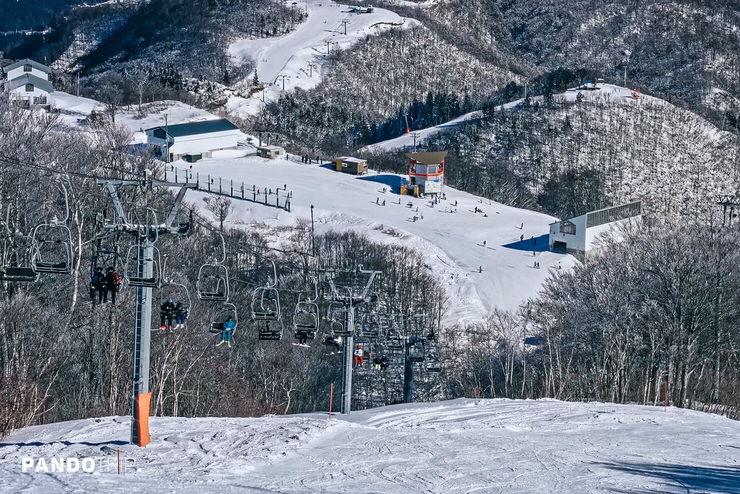
The Yuzawa Ski Resorts are some of Japan’s top winter sports destinations. Yuzawa, in the Japanese Alps (Niigata Prefecture), is world-renowned for its fabulous hot springs, deep powder snow, and vast ski trails. Because of its geographical location, the town receives massive snowfall and enjoys a prolonged winter season, often lasting until May at higher elevations.
Yuzawa is just an 80-minute train ride (approx. 70-90 mins via Joetsu Shinkansen) away from Tokyo, making it easily accessible. Traveling from Yuzawa Station to any of the resorts is simple thanks to an extensive shuttle bus network. There is even one resort, GALA Yuzawa, which is directly connected to a Shinkansen station. If you’re staying in Tokyo and want to make a one-day skiing trip, this is the perfect spot.
Ski Resorts in Yuzawa
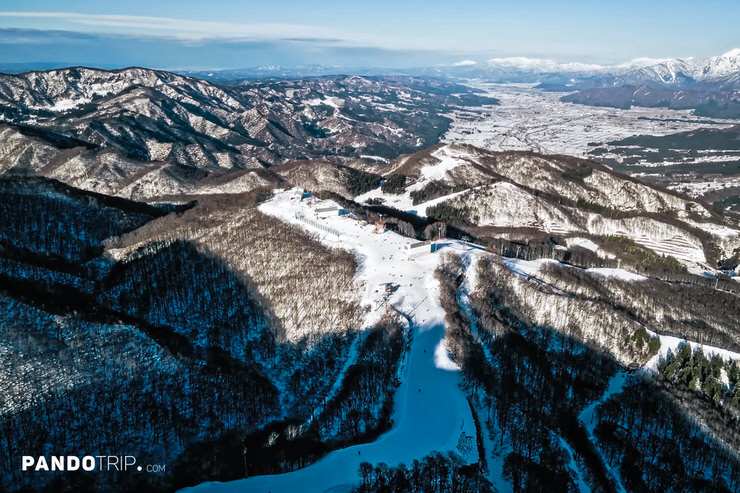
There are a total of twelve ski resorts in and around Yuzawa offering skiing and snow-related sports for all level of participant. If you just want to make some snowballs and play in the snow, well, you can do that in Yuzawa too.
GALA Yuzawa is the only ski resort in the world with its own Shinkansen station, which makes access exceptionally smooth. After you arrive by train, you can rent equipment, buy lift tickets, and board the gondola up to the slopes without leaving the resort building attached to the station.
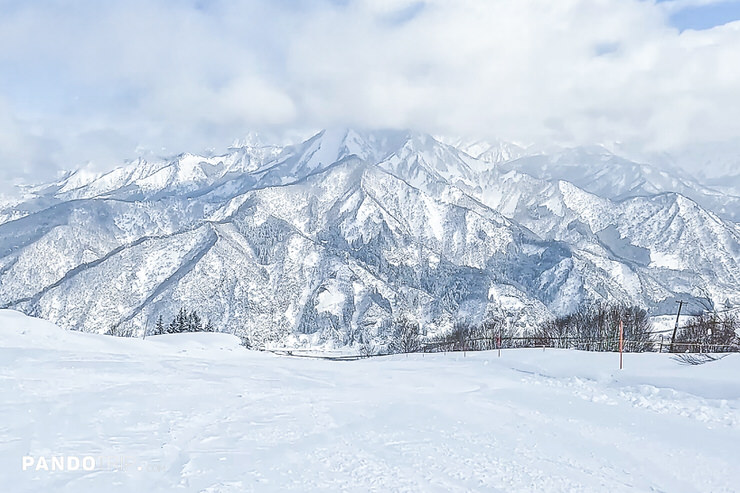
The Naeba Ski Resort in Yuzawa is one of the biggest ski resorts in Japan. As well as having ski trails for novice, intermediate and advanced skiers and snowboarders, the resort offers snow-related activities for non-skiers in their Family Snowland. To just take in the beauty of the snow-clad scenery between Naeba and Kagura, go on a twenty-five-minute Dragondola cable car ride. The views are beyond awesome.
Naeba Ski Resort, located about 30-50 minutes by bus from the town center, is one of Japan’s most famous resorts. Owned by Prince Hotels, it offers trails for novice, intermediate, and advanced skiers, as well as snow activities for non-skiers in their Family Snowland.
The Dragondola: To take in the beauty of the snow-clad scenery, hop on the Dragondola –Japan’s longest gondola. It connects Naeba to the neighboring Kagura Ski Resort via a stunning 25-minute aerial journey over valleys and streams.
Yuzawa Hot Springs
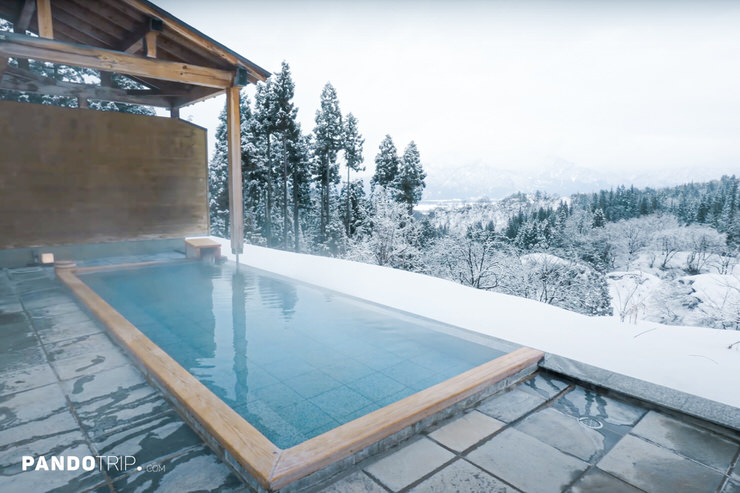
Yuzawa first became popular as a winter destination because of its many hot springs, some of which have histories going back almost nine hundred years. Traditional onsen towns such as Echigo-Yuzawa are filled with ryokan and public baths where you can soak after skiing.
For a unique luxury experience nearby, many travelers visit Satoyama Jujo. Although located in the neighboring city of Minami-Uonuma (about 20 minutes from Yuzawa), it is famous for its open-air baths that offer spectacular views of the 2,000-meter-high Mt. Makihata. Housed in a renovated 150-year-old traditional wooden mansion, it serves as a perfect, quiet retreat after exploring the busier ski slopes of Yuzawa.
Klook.com10. The Blue Pond, Biei, Hokkaido
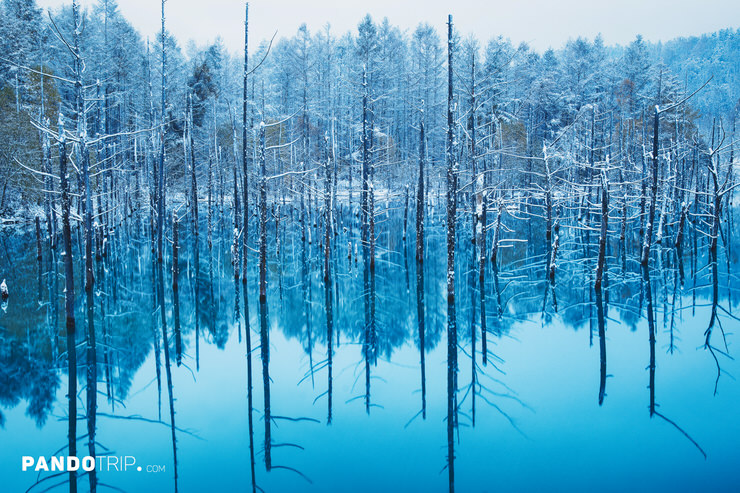
The Blue Pond (Aoiike) is a beautiful body of water hidden by dense forest near the town of Biei in Hokkaido. The lagoon-like pond was created accidentally when an embankment was built on the Biei River to prevent mudflows from Mount Tokachi eruptions; water accumulated behind the blocks, submerging the forest and creating this surreal landscape.
When man tampers with nature, the result is often disastrous, but the Blue Pond is a rare exception. The water contains aluminum particles from nearby springs, which scatter sunlight and turn the water a stunning, milky blue hue.
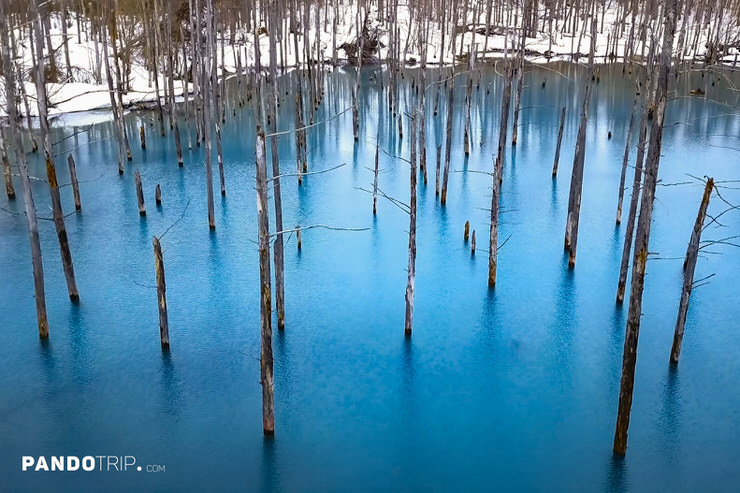
While the pond is famous for its blue water, in the peak of winter (late Dec-March), the surface often freezes completely and is covered in deep snow. You typically cannot see the liquid water during these months. However, it remains a popular destination because of the nighttime illumination. From November to April, powerful spotlights light up the snow-covered trees and the frozen surface. The lights often cycle through blue patterns to mimic the water, creating a mystical, silent atmosphere that is just as magical as the summer view.
Interesting Fact: The Blue Pond in winter was a featured wallpaper image for the Apple Inc release of the macbook Mountain Lion OS X.
Other Places to Visit in Biei in Winter
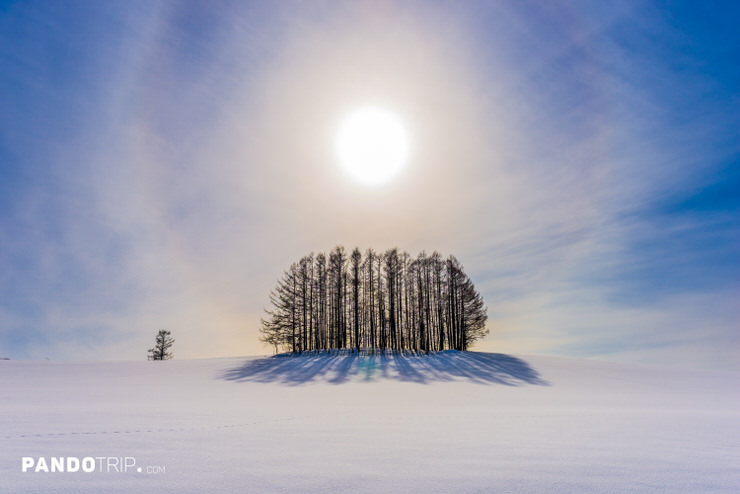
Biei is a peaceful town, and while the area around the Blue Pond is rural, it offers incredible scenery. In winter, Biei is famous for its “Instagram-worthy” rolling snowy hills and lonely trees.
About 20 minutes by car from Biei (and just 5 minutes from the Blue Pond), you’ll find Shirogane Onsen, a small hot spring resort at the foot of the Tokachi Mountains. Established in 1950, this “Platinum Hot Spring” is an ideal getaway for nature lovers.
Hotels here offer therapeutic baths rich in minerals. A notable spot is Aonobi Yuyu, which has been renovated to offer modern Japanese-style rooms and open-air baths. Another popular option is the Shirogane Park Hills Hotel.
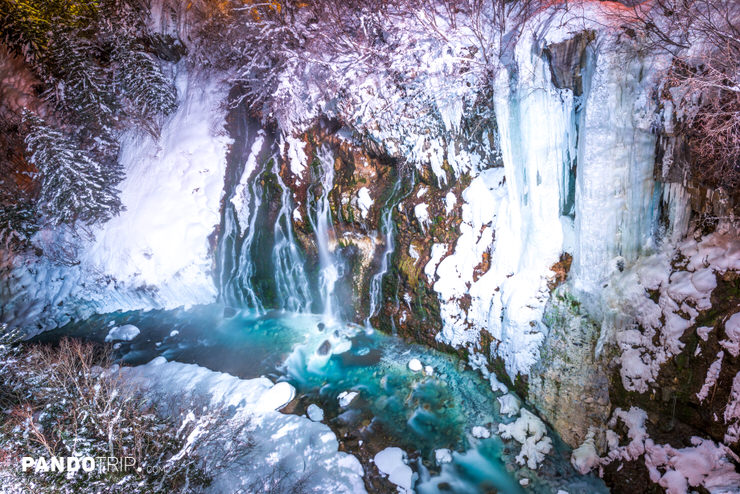
Just a short walk from the onsen district is the stunning Shirahige Waterfall (“White Beard Waterfall”). Unlike the pond, the waterfall does not freeze completely due to the warm underground water source. The blue tint of the water is visible here even in winter, striking a beautiful contrast against the white snow and icicles.
Like the pond, the waterfall is lit up in the evenings. The Blue River Bridge offers the perfect vantage point to see the steam rising from the blue water amidst the frozen winter landscape.
About 20 minutes by car from Biei, you’ll find Shirogane Onsen, a small hot spring resort located at the foot of the Tokachidake Mountains on the western edge of Daisetsuzan National Park. This resort area was established in 1950 after the discovery of hot spring waters. Shirogane Onsen is an ideal getaway for those seeking peace and quiet in nature. Hotels like Aonobi YUYU and Shirogane Park Hills offer relaxing and therapeutic hot spring baths for their guests.
Just a few minutes’ walk from Shirogane Onsen are the stunning Shirahige Waterfalls, one of the area’s main attractions. This 30-meter-high waterfall, nicknamed the “White Beard Waterfall” because of the way the streams fan out over the rock, is especially magical when illuminated at night. The falls are lit up throughout the year, with longer evening hours from roughly November to April. The lights reflect off the snow-covered rocks, frozen trees, and blue river below, creating a dramatic winter scene. The Blue River Bridge is the best spot to view the waterfall and its illumination.
Just a few minutes’ walk from Shirogane Onsen are the stunning Shirahige Waterfalls, one of the area’s main attractions. This majestic 30-meter-high waterfall, nicknamed the “White Beard Waterfall” due to its appearance, becomes even more magical during the evening light displays from November to April. Hundreds of small lights are arranged around the falls, creating a spectacular sight as they reflect off the frozen trees and glittering ice, highlighting the blue rocks below. The Blue River Bridge is the best spot to view the illumination.
Klook.com